
Song - The TITANIC
Click here to listen to this song (MP3 file - by Before the Mast)
See also: Intermediate English: Mystery - The Titanic and the Temple of Doom
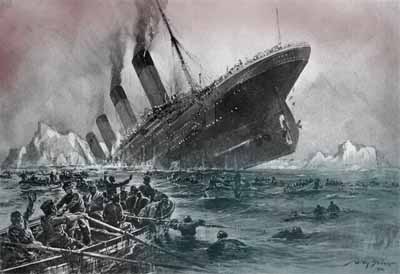 This
is an
early twentieth century folksong, that is said to have
originated in the south of the United States, but is well known on both
sides of the Atlantic. It has been recorded by many artists, with a
number of different versions. This is the text of the version on the
Linguapress.com website, performed by Before the Mast
This
is an
early twentieth century folksong, that is said to have
originated in the south of the United States, but is well known on both
sides of the Atlantic. It has been recorded by many artists, with a
number of different versions. This is the text of the version on the
Linguapress.com website, performed by Before the MastThe TITANIC
It was on a Monday morning just about one o'clock,
The great Titanic began to reel and rock.
And the people began to cry, saying, “Lord I'm going to die."
It was sad when that great ship went down.
When they were building the Titanic, they knew what they would do.
They were going to build a ship that the water would not go through,
But God with his mighty hand showed to the world what he could not stand.
It was sad when that great ship went down.
It was sad
when that great ship
went down,
It was sad when that great ship went down.
Husbands and wives, little children lost their lives.
It was sad when that great ship went down.
It was sad when that great ship went down.
Husbands and wives, little children lost their lives.
It was sad when that great ship went down.
Now as they left old Eng-a-land, as they were pulling from the shore.
The rich they did declare they would not ride with the poor.
So they put the poor below, they were the first to go.
It was sad when that great ship went down.
It was sad
when that great ship
went down,
It was sad when that great ship went down.
Husbands and wives, little children lost their lives.
It was sad when that great ship went down.
It was sad when that great ship went down.
Husbands and wives, little children lost their lives.
It was sad when that great ship went down.
Now the people on this ship they were a long way from home,
Had friends all around them, didn't know their time had come,
But death came riding by, sixteen hundred had to die.
It was sad when that great ship went down.
It was sad
when that great ship
went down,
It was sad when that great ship went down.
Husbands and wives, little children lost their lives.
It was sad when that great ship went down.
It was sad when that great ship went down.
Husbands and wives, little children lost their lives.
It was sad when that great ship went down.
When the Titanic was sinking into the icy sea,
It was said that they were singing "Nearer, my God, to thee"
Nearer my God, to thee.
It was sad, when that great ship went down.
Word guide:
reel: move from side to side
mighty: very powerful
to stand: to tolerate, to accept
pull from the shore: go away from the coast, go out to sea.
Thee (old English): a singular form of 'you' (like French "toi" or German "dich")
Return to Linguapress site index
Printing: Printer-friendly page - better than PDF
Copyright : All rights reserved. This teaching resource is © copyright Linguapress 1994 renewed 2025. Do not copy this document to any other website . Copying permitted for personal study, or by teachers for use with their students
Republication on other websites or in print is not authorised
Originally published in Freeway, the Intermediate level English newsmagazine.