
American society
America's Drive-in Movie Theaters
The classic American outdoor movie theater is making a comeback
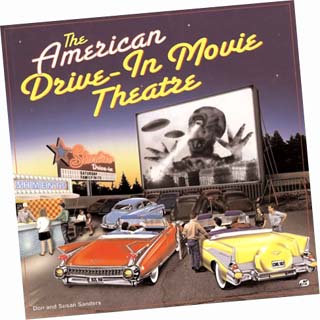 They were a cultural
icon, a classic product of mid-twentieth century lifestyle; movie
theaters where you just drove up, paid a few bucksdollars,
parked facing the screen, relaxed in your car, and waited for the movie
to begin.
They were a cultural
icon, a classic product of mid-twentieth century lifestyle; movie
theaters where you just drove up, paid a few bucksdollars,
parked facing the screen, relaxed in your car, and waited for the movie
to begin.
In the mid fifties, when drive-in theaters were at their most popular, there were over 5000 of them spread all across the USA. It was the age of the American Dream, of James Dean and the young Elvis Presley, a time before anyone had heard of Vietnam, smoga mixture of smoke and fog, pollution, inner cities or color TV.
The "automobile" was king, a symbol of the new-found freedoms of the great American middle class. The American dream was to live in a nice house in a friendly suburb, with a large comfortable automobile or two parked in the drivewayaccess to a house; and the automobile was there to be used.
Drive-in movie theaters originated in the eastern USA in the 1930's; in those days the quality of movies was not terribly polished, so people tended not to worry about poor quality sound and images that flickeredjumped around on the vast outdoor screens in front of them. Often, it wasn't much better in indoor movie theaters. Moreover the drive-ins had advantages that indoor theaters did not have; you didn't get disturbed by the person next to you, and you could go as you pleased. In those days, people dressed up to go to the movies in town; there was no dressing up for drive-ins.
From the end of the Second World War, until the mid sixties, drive-ins lived their glory years. They got bigger and smarter, and the sound quality improvedgot better markedly. In the early years, the sound had come from huge loudspeakers placed below the screen; by the fifties, the system of individual sound for each car had become the norm, and all you had to do was to roll down the window and hook the smallloudspeaker over it. If there were too many mosquitosinsects that sting, you could even pull the speaker right into the car, and roll the window up again.
Movie theaters were changing; but so was American society. By 1965, the American Dream was beginning to show some cracks. Once color television arrived, the writing was on the wall for thousands of U.S. movie-theaters, both drive-ins and indoor cinemas. With an escalating crime ratelevel and rising fears of violence, more and more Americans decided that it was better not to go out in the evening at all.
Drive-in movie theaters were also suffering from commercial pressures; some went out of business, unable to compete with the flexibility and comfort of new suburban multiplexwith several screens cinemas - but many profitable theaters closed too. As towns and cities expanded, large suburban sites became valuable real estateland, property, and few owners could resist multi-million dollar offers to sell out to supermarket chains or business corporations. Over 1,000 drive-ins closed during the 1970's; over 2,000 followed in the next decade; by the time 1990 arrived, there were less than 1,000 drive-in screens across the USA, and few people thought that there would be any left at all by the end of the century.
Yet things have not happened that way. In 2019, there were still 321 drive-in movie theaters in the USA, a third less than there were at the start of the century. However, some movie theaters have opened new screens, particularly in areas where suburban real estate values have not escalatedrisen, gone up too far. Ohio and California, for instance, still have 44 drive-in theater screens, and the state of New York has 49 !
Then COVID-19 came along, and while traditional movie theaters in many places had to shut down, most drive-ins could remain open. With people watching from the socially-distanced safety of their own car, the drive-in movie theater was suddenly fashionable again, and it looked like a fashion that is likely to remain. The future for drive-in movie theaters was looking as good as it was back in the heydaybest times of the 1950's, three generations ago. But in the end, Covid paused the decline in drive-in movie theaters, but did not put it into reverse.
Still today's theater owners have learned to market their assetssomething that is positive more effectively; instead of remaining empty during the day time, theater parking lotscar parks are now used for flea marketsplaces where people sell old things they don't want, open air sales, and other activities.
Technology has come to the drive-in too; the modern drive-in uses a low-frequency FM radio or bluetooth sound system, and viewers simply tune their car radio to the right channel, and listen to the soundtrack using their own in-car hi-fi. Given the quality of the sound systems in some cars these days, there is a new breedtype, group of drive-in theater fans who come along to enjoy their own in-car sound systems. Watching a movie like Twister with the advantage of a quadriphonic megawatt in-car hi-fi was, it is said, quite an experience - especially on a windy night with lightning flashing in the distance!
Many movie-goers, however, come along just for the fun, or the nostalgia, of watching a movie in a different sort of environment, under a star-lit sky, and in the comfort of their car! They can smoke if they want to, drink coffee, or bring along a pizza or a burger; subject to covid-19 regulations, food and drink are available in today's drive-ins, providing another plus that indoor theaters cannot offer... and that too is helping drive-ins to survive.
It is still possible to visit a drive-in movie theater in the USA, and in the world of covid-19 the drive-in offers one of the safest ways of enjoying an evening out. Watching a movie from the back of a 1962 Cadillac convertible was one thing; doing so from the back of a Honda Civic is not the same experience ... but the sound quality is better, and as they say, better safe than sorry.
Difficult words:

buck: dollar - smog: a mixture of smoke and fog, pollution - driveway: access to a house - flicker: jump around - improve: get better - mosquito: insect that stings - rate: level - multiplex: with several screens - real estate: land, property - escalate: rise, go up - heyday : best times - asset: something that is positive - parking lot: car park - flea market: place where people sell old things they don't want - breed: race -
Printing: Optimized for printing
Copyright © Linguapress. Do not copy this document to any other website
Copying permitted for personal study, or by teachers for use with their students
Copyright notice.
This resource is © copyright Linguapress - Updated 2020. Originally published in Spectrum magazine.
This text may not be reproduced on other websites nor in printed form without written permission from the publishers. Reproduction is authorised exclusively for personal use by students, or for use by teachers with their classes.
Student worksheet - interactive
Exercises:
Multiple choice questions
Select the correct version for each missing word, from the options listedIn the mid fifties, when drive-in theaters were at their popular, there were over 5000 of them spread all the USA. It was the age of the American Dream, of James Dean and the Elvis Presley, a time before had heard of Vietnam, smog, inner cities or color TV.
The "automobile" was , a symbol of the new- freedoms of the great American middle class. The American dream was to live in a house in a friendly suburb, with a large comfortable automobile or two in the driveway; and the automobile was there to be .
Drive-in movie theaters originated in the eastern USA in the 1930's; in days the quality of movies was not polished, so people tended to worry about poor quality sound and images that flickered on the vast outdoor screens in front of them. Often, it wasn't much better in movie theaters. Moreover the drive-ins had advantages that indoor theaters did not have; you didn't disturbed by the person next to you, and you go as you pleased. In those days, people dressed up to go to the movies in town; there was no up for drive-ins.
Comprehension: true/false exercise:
Read the article and decide if these statements are true or false: justify your answer by quoting from the text.2. People liked the original drive-ins because the quality of the pictures was so good.
3. In the 1930's people usually put on smart clothes if they went to the movies in town.
4. The original drive-ins had individual loud-speaker systems for each car.
5. The rise in street crime contributed to the falling fortunes of drive-in movie theaters.
6. The owners of many drive-in movie theaters opened supermarkets in their place.
7. The 1970's were the worst decade in the history of drive-in movie theaters.
8. Today, drive-in movie theaters tend to be used for other things during daylight hours.
Grammar:
Past Perfect vs. Past Simple (Timeline Sequencing)Because this text traces a historical arc from the 1930s through the pandemic era to the present day, it relies repeatedly on the Past Perfect tense (had+past participle) to establish which events occurred before other past turning points. Note also the use of the narrative past , and the past of habit for example "In those days, people dressed up to go to the movies in town..." (repeated action / habit, not jus a simple past event).
Modal verbs
This text is rich in examples of the use of a wide range of modal verbs
1. Past ability & possibility
Could:
"...you could go as you pleased."
"...you could even pull the speaker..."
"...most drive-ins could remain open."
"...few owners could resist..."
2. Present & future ability & possibility
Can / cannot :
"They can smoke if they want to..."
"...indoor theaters cannot offer..."
3. Past obligation & necessity
Had to:
"...where you just drove up, paid... and waited..." (Understood obligation)
"...all you had to do was to roll down the window..."
"...traditional movie theaters in many places had to shut down..."
4. Present & future expectation, deduction, or prediction
Would:
"...few people thought that there would be any left..."
"...it looked like a fashion that is likely to remain..." (Semi-modal prediction)
5. Marginal / semi-modals & willingness
Used to / tended to (Past Habit):
"...people tended not to worry about poor quality..."
Need / want to (Absence of necessity & intention):
"...if they want to..."
 Copyright
information.
Copyright
information.